

#4 Gender-Medizin: Why gender matters in medicine - improving care through evidence and equity
Prof. Dr. med. Carolin Lerchenmüller, Dr. med. Jeanne Moor August 2026
Women make up the majority of medical students and represent roughly half of today's society, yet they remain underrepresented in leadership roles, expert committees, and as participants in clinical studies. This gap directly affects diagnostics, treatment, and quality of care. A medical approach that systematically considers both biological sex and sociocultural gender among patients and physicians is essential for more personalized, equitable, and effective healthcare.
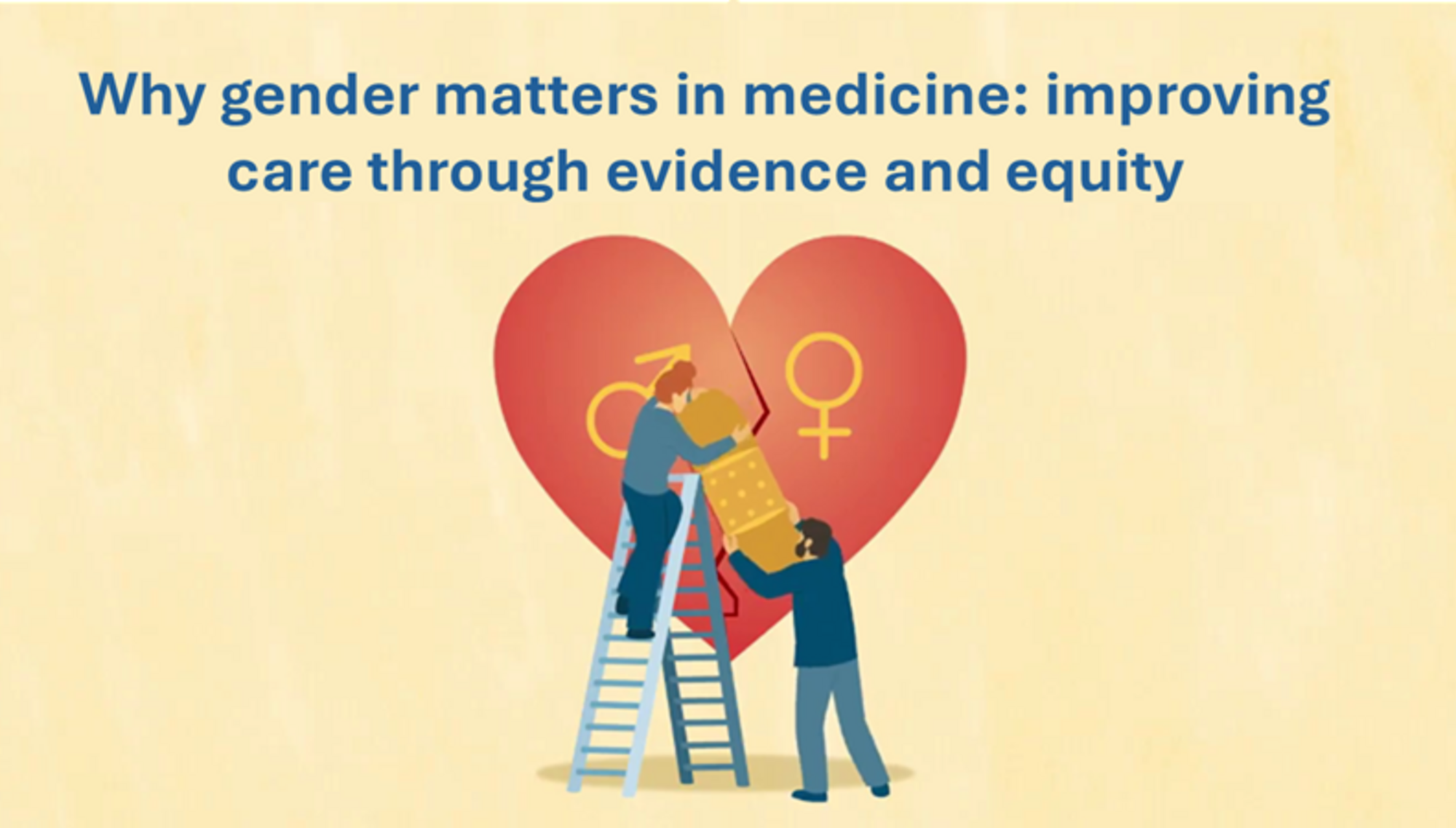
In 1991, cardiologist Bernadine Healy introduced the term “Yentl syndrome” to describe how women were often only treated appropriately when their symptoms resembled those of men, referring to the phenomenon where women receive adequate diagnostic attention and treatment mainly when their disease presentation matches the “male norm,” leading to systematic underdiagnosis or undertreatment when symptoms differ.(1) More than three decades later, contemporary analyses show that sex- and gender-related biases still shape clinical trials, guidelines, and everyday practice.(2,3) Our own recent analysis of cardiovascular clinical trials confirms this persistent imbalance: women remain underrepresented and sex/gender reporting remains suboptimal across many disease areas, despite modest improvement over time.(4) These findings illustrate how structural gaps in research participation continue to translate into gaps in evidence and care.
What is gender medicine?
Gender medicine examines how biological sex and sociocultural gender influence disease development, diagnosis, and treatment outcomes. Importantly, sex and gender also interact dynamically with one another.(2) Increasing evidence shows that binary classifications insufficiently capture human biological and social diversity, prompting multidimensional approaches in which sex may, for example, be assessed through variables such as chromosomes, hormones, or body composition, while gender can include factors such as identity, social roles, stressors, and health behaviors. Contemporary medicine increasingly conceptualizes sex variation as a spectrum to improve both research validity and clinical care. (5)
Symptoms of myocardial infarction: Sex differences
A well-known example is myocardial infarction. While chest pressure or pain is the most common symptom in about 80% of cases in men and women, women more frequently report additional and less specific symptoms such as profound fatigue, dizziness, nausea or vomiting, epigastric and neck or back pain.(6) If these differences are overlooked, women are more likely to experience delays in diagnosis and therefore suffer from worse outcomes.(2,7)
Sex-specific cardiovascular risk factors
Sex-specific risk factors further influence cardiovascular health.(2) In women, pregnancy-related complications such as preterm birth, infants small for gestational age, infertility, miscarriage, gestational diabetes, and hypertensive disorders like preeclampsia play a significant role.(2,8) Hormonal influences, including early menopause, hormone replacement therapy, polycystic ovary syndrome, or endometriosis, also impact cardiovascular risk.(2,8) Additionally, common risk factors such as diabetes or smoking appear to increase cardiovascular risk more strongly in women than in men.(2) In men, testosterone deficiency is recognized as a specific risk factor and is associated with an adverse cardiometabolic profile and increased cardiovascular risk.(2,9) Erectile dysfunction may signal underlying vascular dysfunction and independently predicts future cardiovascular events.(2,10)
Pharmacotherapy: Accounting for sex differences
Sex differences are also evident in pharmacotherapy. At identical dosages, women often achieve higher drug plasma levels, which can increase the risk of adverse effects.(11) Women also report more frequent adverse drug reactions to guideline-recommended heart failure therapies.(12) In heart failure, emerging evidence suggests that lower medication doses may be more beneficial for women.(13) However, high-quality trials explicitly designed to investigate these differences are still lacking, and these insights are only slowly being integrated into clinical guidelines.(3)
Structural implementation: specialized programs
Specialized initiatives such as the Women’s Heart Health Program at the University Hospital Zurich demonstrate how sex/gender-sensitive care can be structurally embedded in clinical practice, for example, in the management of coronary vasospasm, spontaneous coronary artery dissection, and pregnancy-related cardiovascular complications.(14)
The role of female physicians and scientists
Beyond the patient perspective, increasing attention is being paid to women's roles as physicians and scientists. Evidence shows that diverse teams, including women in leadership roles, are associated with higher research quality and innovation capacity.(15–17) Women physicians are more likely to adhere to evidence-based guidelines, emphasize preventive care, and provide psychosocial counseling.(18,19) Strikingly, women experiencing myocardial infarction have a higher survival rate when treated by women physicians,(20) a pattern supported by broader meta-analytic evidence across specialties.(21)
Gender gaps in career advancement
Despite this, the proportion of women steadily declines along the medical career ladder. While women now constitute a large proportion of medical students and residents in many European countries,(22–24) they remain markedly underrepresented in senior leadership roles.(15,25,26) This pattern cannot be solely explained by age demographics. Instead, non-transparent selection processes, lack of role models, insufficient part-time structures, discrimination, and persistent stereotypes play a decisive role.(27)
Ambitions and structural barriers
At the start of their careers during medical school, female and male physicians reported similar leadership ambitions. However, as their careers progressed and new challenges emerged, men demonstrated significantly higher career ambitions than women.(28) Women with strong career aspirations report encountering structural barriers such as discrimination, and motherhood is often perceived negatively in professional environments.(28) At the same time, many female physicians carry the majority of caregiving responsibilities, more frequently postpone plans for children, and report higher rates of fertility challenges than the general population.(29)
Solutions: Structural reform and cultural shift
The solution does not lie in women conforming to traditional career patterns, but in structural reform. This includes flexible working models, opportunities for remote work, transparent parental leave policies, mentoring programs, and actively encouraging men to take parental leave. Evidence from the COVID-19 period highlights how gender and parenthood substantially affect academic productivity, underlining the urgency of systemic change.(30)
Conclusion: Sex and gender as quality indicators
Integrating sex and gender into medicine is therefore not a niche topic but a hallmark of high-quality, future-oriented healthcare. It connects patient-centered care with structural equity in the medical profession, benefitting patients, physicians, and the healthcare system alike.
References
- Healy B. The Yentl syndrome. N Engl J Med. 1991 Jul 25;325(4):274–6. doi:10.1056/NEJM199107253250408 PubMed PMID: 2057027.
- Regitz-Zagrosek V, Gebhard C. Gender medicine: effects of sex and gender on cardiovascular disease manifestation and outcomes. Nature Reviews Cardiology. 2023 Apr 1;20(4):236–47. doi:10.1038/s41569-022-00797-4
- Bastian-Pétrel K, Rohmann JL, Oertelt-Prigione S, Piccininni M, Gayraud K, Kelly-Irving M, et al. Sex and gender bias in chronic coronary syndromes research: analysis of studies used to inform the 2019 European Society of Cardiology guidelines. Lancet Reg Health Eur. 2024 Oct;45:101041. doi:10.1016/j.lanepe.2024.101041 PubMed PMID: 39279866; PubMed Central PMCID: PMC11402417.
- Bley M, Mathez L, Menz S, Stephan I, Regitz-Zagrosek V, Lerchenmueller MJ, et al. Consideration of sex/gender aspects in cardiovascular clinical trials. Clin Res Cardiol. 2025 Dec;114(12):1752–64. doi:10.1007/s00392-025-02793-3 PubMed PMID: 41296008; PubMed Central PMCID: PMC12708832.
- Fausto-Sterling A. Gender/Sex, Sexual Orientation, and Identity Are in the Body: How Did They Get There? J Sex Res. 2019;56(4–5):529–55. doi:10.1080/00224499.2019.1581883 PubMed PMID: 30875248.
- van Oosterhout REM, de Boer AR, Maas AHEM, Rutten FH, Bots ML, Peters SAE. Sex Differences in Symptom Presentation in Acute Coronary Syndromes: A Systematic Review and Meta-analysis. J Am Heart Assoc. 2020 May 5;9(9):e014733. doi:10.1161/JAHA.119.014733 PubMed PMID: 32363989; PubMed Central PMCID: PMC7428564.
- Davis LL, Mishel M, Moser DK, Esposito N, Lynn MR, Schwartz TA. Thoughts and behaviors of women with symptoms of acute coronary syndrome. Heart & Lung: The Journal of Cardiopulmonary and Acute Care. 2013 Nov 1;42(6):428–35. doi:10.1016/j.hrtlng.2013.08.001
- Maas AHEM, Rosano G, Cifkova R, Chieffo A, van Dijken D, Hamoda H, et al. Cardiovascular health after menopause transition, pregnancy disorders, and other gynaecologic conditions: a consensus document from European cardiologists, gynaecologists, and endocrinologists. Eur Heart J. 2021 Mar 7;42(10):967–84. doi:10.1093/eurheartj/ehaa1044 PubMed PMID: 33495787; PubMed Central PMCID: PMC7947184.
- Traish AM. Major cardiovascular disease risk in men with testosterone deficiency (hypogonadism): appraisal of short, medium and long-term testosterone therapy - a narrative review. Sex Med Rev. 2023 Sep 27;11(4):384–94. doi:10.1093/sxmrev/qead031 PubMed PMID: 37587664.
- Vlachopoulos CV, Terentes-Printzios DG, Ioakeimidis NK, Aznaouridis KA, Stefanadis CI. Prediction of cardiovascular events and all-cause mortality with erectile dysfunction: a systematic review and meta-analysis of cohort studies. Circ Cardiovasc Qual Outcomes. 2013 Jan 1;6(1):99–109. doi:10.1161/CIRCOUTCOMES.112.966903 PubMed PMID: 23300267.
- Zucker I, Prendergast BJ. Sex differences in pharmacokinetics predict adverse drug reactions in women. Biol Sex Differ. 2020 Jun 5;11(1):32. doi:10.1186/s13293-020-00308-5 PubMed PMID: 32503637; PubMed Central PMCID: PMC7275616.
- Bots SH, Groepenhoff F, Eikendal ALM, Tannenbaum C, Rochon PA, Regitz-Zagrosek V, et al. Adverse Drug Reactions to Guideline-Recommended Heart Failure Drugs in Women: A Systematic Review of the Literature. JACC Heart Fail. 2019 Mar;7(3):258–66. doi:10.1016/j.jchf.2019.01.009 PubMed PMID: 30819382.
- Santema BT, Ouwerkerk W, Tromp J, Sama IE, Ravera A, Regitz-Zagrosek V, et al. Identifying optimal doses of heart failure medications in men compared with women: a prospective, observational, cohort study. Lancet. 2019 Oct 5;394(10205):1254–63. doi:10.1016/S0140-6736(19)31792-1 PubMed PMID: 31447116.
- Gulati M, Hendry C, Parapid B, Mulvagh SL. Why We Need Specialised Centres for Women’s Hearts: Changing the Face of Cardiovascular Care for Women. Eur Cardiol. 2021 Feb;16:e52. doi:10.15420/ecr.2021.49 PubMed PMID: 35024054; PubMed Central PMCID: PMC8728884.
- Lerchenmüller C, Zelarayan L, Streckfuss-Bömeke K, Gimenez MR, Schnabel R, Hashemi D, et al. Moving toward gender equity in the cardiology and cardiovascular research workforce in Germany: a report from the German Cardiac Society. Eur Heart J Open. 2023 Mar;3(2):oead034. doi:10.1093/ehjopen/oead034 PubMed PMID: 37090057; PubMed Central PMCID: PMC10114529.
- Chhaya VY, Binion CC, Mulles SM, Tannhauser PA, Aziz DZ, Greenwood JD, et al. Gender Bias in Clinical Trial Enrollment: Female Authorship Matters. Ann Vasc Surg. 2023 Sep;95:233–43. doi:10.1016/j.avsg.2023.03.008 PubMed PMID: 37023917.
- Koning R, Samila S, Ferguson JP. Who do we invent for? Patents by women focus more on women’s health, but few women get to invent. Science. 2021 Jun 18;372(6548):1345–8. doi:10.1126/science.aba6990 PubMed PMID: 34140388.
- Bertakis KD. The influence of gender on the doctor–patient interaction. Patient Education and Counseling. 2009 Sep 1;EACH 2008 - International Conference on Communication in Healthcare, Oslo, Norway76(3):356–60. doi:10.1016/j.pec.2009.07.022
- Tsugawa Y, Jena AB, Figueroa JF, Orav EJ, Blumenthal DM, Jha AK. Comparison of Hospital Mortality and Readmission Rates for Medicare Patients Treated by Male vs Female Physicians. JAMA Intern Med. 2017 Feb 1;177(2):206–13. doi:10.1001/jamainternmed.2016.7875 PubMed PMID: 27992617; PubMed Central PMCID: PMC5558155.
- Greenwood BN, Carnahan S, Huang L. Patient-physician gender concordance and increased mortality among female heart attack patients. Proc Natl Acad Sci U S A. 2018 Aug 21;115(34):8569–74. doi:10.1073/pnas.1800097115 PubMed PMID: 30082406; PubMed Central PMCID: PMC6112736.
- Heybati K, Chang A, Mohamud H, Satkunasivam R, Coburn N, Salles A, et al. The association between physician sex and patient outcomes: a systematic review and meta-analysis. BMC Health Serv Res. 2025 Jan 17;25(1):93. doi:10.1186/s12913-025-12247-1 PubMed PMID: 39819673; PubMed Central PMCID: PMC11740500.
- Frauen in der Medizin 2021 – HCC [Internet]. [cited 2026 Jun 8]. Available from: https://healthcc.at/frauen-in-der-medizin-2021/
- Wien MU. Medizinischen Universität Wien [Internet]. [cited 2026 Jun 8]. MedAT-Aufnahmeverfahren zum Medizinstudium: 15.668 Anmeldungen | MedUni Wien. Available from: https://www.meduniwien.ac.at//web/ueber-uns/news/2025/news-im-april-2025/medat-aufnahmeverfahren-zum-medizinstudium-15668-anmeldungen/
- FMH [Internet]. [cited 2026 Jun 8]. FMH-Ärztestatistik. Available from: https://www.fmh.ch/themen/aerztestatistik/fmh-aerztestatistik.cfm
- Borrelli N, Brida M, Cader A, Sabatino J, Czerwińska-Jelonkiewicz K, Shchendrygina A, et al. Women leaders in Cardiology. Contemporary profile of the WHO European region. Eur Heart J Open. 2021 Aug;1(1):oeab008. doi:10.1093/ehjopen/oeab008 PubMed PMID: 35919091; PubMed Central PMCID: PMC9242062.
- Richter KP, Clark L, Wick JA, Cruvinel E, Durham D, Shaw P, et al. Women Physicians and Promotion in Academic Medicine. N Engl J Med. 2020 Nov 26;383(22):2148–57. doi:10.1056/NEJMsa1916935 PubMed PMID: 33252871.
- Gangwani P, Kolokythas A. Gender Gap in Leadership in Academic Medicine and Dentistry: What Are the Barriers? What Can Be Done To Correct It? J Oral Maxillofac Surg. 2019 Aug;77(8):1536–40. doi:10.1016/j.joms.2019.04.023 PubMed PMID: 31370924.
- Moor J, Woodtli L, Baumgartner C, Kublickiene K, Streit S, Nater C. Factors Associated with Career Ambitions in General Internal Medicine: Insights Into Gender Disparities in Leadership Aspirations. medRxiv. 2025 Jan 1;2025.05.18.25327847. doi:10.1101/2025.05.18.25327847
- Egger I, Weidlinger S, Zdanowicz J, Kublickiene K, Nater C, Streit S, et al. Parenthood, Caregiving and Female Fertility Among General Internal Medicine Physicians in Switzerland. medRxiv. 2025 Jan 1;2025.09.10.25335526. doi:10.1101/2025.09.10.25335526
- Staniscuaski F, Kmetzsch L, Soletti RC, Reichert F, Zandonà E, Ludwig ZMC, et al. Gender, Race and Parenthood Impact Academic Productivity During the COVID-19 Pandemic: From Survey to Action. Front Psychol. 2021;12:663252. doi:10.3389/fpsyg.2021.663252 PubMed PMID: 34054667; PubMed Central PMCID: PMC8153681.
Publication Date:
03 August 2026
Themes:
Disciplines:
Authors: