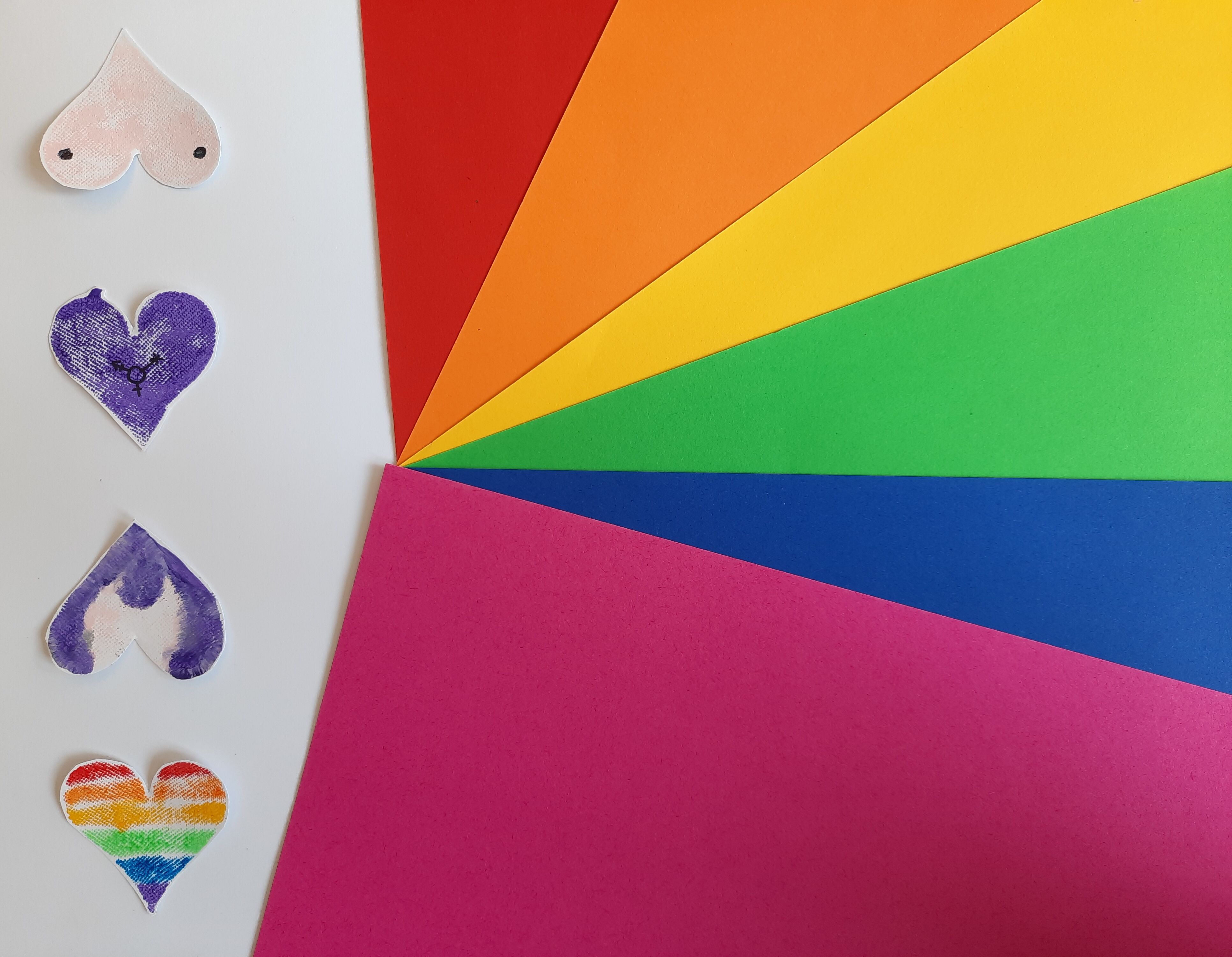

Visions of sex. Women’s sexual health in the visual arts
University of Geneva, June 17-18, 2027
Deadline for proposals: November 9, 2026
Since the struggles for reproductive health that marked the 1970s the feminist movements, the visual arts have played a crucial role in establishing a new visual vocabulary to rethink the connection between health, gender, and sexuality. Visual culture is paramount in the context of a reconfiguration of knowledge, practices, and representations surrounding sexual health driven by feminist, queer, and intersectional liberation movements.
The visualization of bodies within a medical context has historically been the site for the construction of knowledge based on objectification and the fiction of a neutral gaze. As Donna Haraway has pointed out, as conceived by modern science, the act of looking produces asymmetrical relationships, in which the object of the gaze is presented as transparent and penetrable. On the contrary visual practices emanating from feminist movements have approached representations as part of a struggle for autonomy, thereby enabling to conceptualize the image and the gaze from the perspective of self-determination. Taking its title from Griselda Pollock’s eponymous text, this conference aims to examine the production of a feminist “counter-visuality” of female bodies and sexualities. While the language of medical objectivity is being reconfigured through a re-examination of the distance separating the subject and the object of knowledge, the assertion of a right to pleasure provides the foundation for a new exploration of female sexuality, in line with the most radical positions of feminism in the 1960s and 1970s.
This conference is dedicated to examining the intersection of visual culture, artistic creation, and sexual health from the 1970s to the present day through an intersectional feminist lens. It aims to explore the female body not only in its material dimension but also in terms of its representations and is grounded in an inclusive conception of femininity encompassing cis and trans women.
Proposals for papers in the fields of art history and photography, curatorial studies, film history, and visual culture may address—though are not limited to—one of the following thematic areas:
- Representing the reproductive body: menstruation, abortion, pregnancy, childbirth.
- Intersectional perspectives on sexual health in art and visual culture: class, gender, race, and sexuality.
- Self-help practices and activist counter-visualities.
- Intersex bodies between medicalization, image, and the archive.
- Trans perspectives and critiques of heteronormativity.
- Sexual well-being and politics of care in contemporary art.
- Sex work and women’s health in visual culture.
- Representing sexual autonomy: from anatomy to pleasure.
- Transnational circulations: visual productions, sexuality, and health.
- Aging female bodies in Art and Visual Culture.
Proposals in french or english for 20-minutes papers (including a title and an abstract of 200–300 words, and a short bio max 150 words) should be submitted by November 9, 2026, to the following address: celia.honore unige ch
Organizing Committee
Giovanna Zapperi, Université de Genève
Célia Honoré, Université de Genève
Scientific Committee
Ilana Eloit (Université de Genève), Alessandra Gissi (Università di Napoli L’Orientale), Célia Honoré (Université de Genève), Elvan Zabunyan (Université Paris 1 Panthéon-Sorbonne), Giovanna Zapperi (Université de Genève)
This conference is organized in the framework of the research project “Visions of Sex” funded by the Centre Maurice Chalumeau en Sciences des Sexualités, University of Geneva.
Publication Date:
25 September 2026
Deadline:
09 November 2026
Themes:
Disciplines:
Institutions:
Université de Genève, Maurice Chalumeau Centre for Sexual Sciences