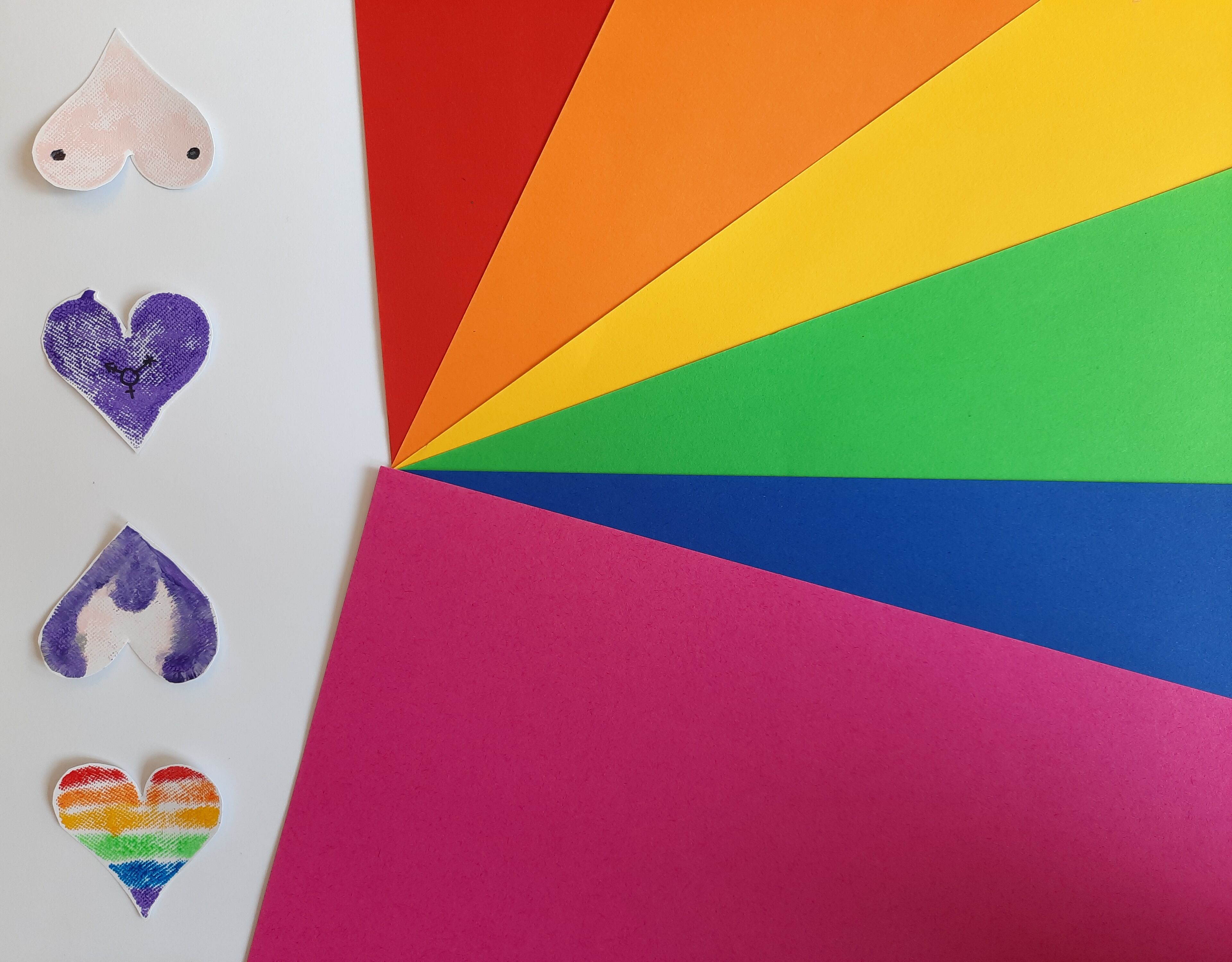

Trans Lesbian Life
Trans lesbians are the shadow history of trans femininity. Despite the demographic significance, archival proliferation, and longstanding cultural contributions of trans lesbians -- from the paintings of Toni Ebel (c1950) to the films of the Wachowski sisters (1995-present) -- both histories of lesbianism and transness consign the trans lesbian to footnotes. Trans lesbians appear as an aside in Esther Newton’s comment about hormone queens gone deep stealth to live with other women. They bear the weight of representation in origin stories for organized feminist transphobia -- the fabled flashpoint of Beth Elliot’s attempted exclusion from the 1973 West Coast Lesbian Conference, for example. And trans lesbian identity is rendered historiographically significant for its counter hegemonic exposure of the enmeshment of zones of trans experience, desire and sociality in Jules Gill-Peterson’s invocation of trans lesbians as the TERF’s, and sexology’s, nightmare. For this issue, we propose a change of perspective: it is high time to put trans lesbians in the spotlight, not as a reference point in discussion of supposedly more general or abstract points of lesbian and trans history and theory, but as themselves, in all of the particularities of their trans lesbian life.
We propose trans lesbian life as a broad category that indexes both a discernably non-cis gendered positionality and the desire for women, inclusively conceived. Thus understood, trans lesbian life is inclusive of trans lesbianism as a claimed identity, as a set of erotic practices, as textual or visual representations, as a political orientation, and above all as a desire for the proliferation of lesbian life and culture. Against narratives that see transness as a threat to or a replacement for lesbianism, we seek to turn attention to the ways that trans lesbianism celebrates, upholds, and expands on histories of lesbian life—histories that it has always been a part of.
For this reason, we believe it is vitally important to speak of trans lesbian life—even now, especially now. In spite of all the considerable forces actively trying to suppress its very possibility, trans lesbian life continues to flourish: in bars and Discord chatrooms, in bedrooms and in the streets, in literature and in memes, in political struggles and in wanton expression of lust. Therefore, to speak of trans lesbians only—or even primarily—as a flashpoint in culture wars and a minority under threat is to do them a great disservice.
To the end of giving an account of trans lesbian life, we invite contributions that:
-
Highlight how trans lesbianism is lived, practiced and expressed, both today and throughout history, and shed light on trans lesbian modes of history- and community- making, including specifically digital and niche forms of trans lesbian community formation;
-
Show how trans lesbian life and culture can contribute to lesbian and trans theory and philosophy, and consider what a trans lesbian perspective can contribute to our understanding of transfemininities, transwomanhoods and gendered bodyminds more broadly.
-
Explore gender politics and erotics of trans lesbian relationships (t4t, relationships between trans and non-trans lesbians, non-binary lesbians etc.) as well as particularly trans lesbian forms of sexual practice and expression;
-
Consider how the conditions of trans lesbian life are co-constitued through intersections with class and conditions of work, race and racialisation, geography and geopolitics, and all the other factors that help to pluralize our understanding of trans lesbian lives;
-
Put trans lesbian life in conversation with Black feminism, queer theory, mad/crip theory, porn and kink studies, new media studies, femme theory, and contemporary reconsiderations of feminist theories across its many “waves”.
Submission Instructions
In all of the above, we especially welcome contributions that provide perspectives that decenter Western standpoints and which speak to the conditions of trans lesbian life outside of the Western context, or which seek to trouble the West-versus-the-rest binary that continues to structure so much of our understanding of globalisation and locality in women, gender, and sexuality studies. We also welcome contributions from Central Eastern European and Diasporic (CEED) perspectives, and those which decenter or provincialise hegemonic American histories. And we welcome creative approaches to the article form.
Please send short proposals of 300 word and a short bio to Dr. J. Szpilka, jszpilka swps.edu pl and Dr Em Cousens emily.cousens nulondon.ac uk
Publikationsdatum:
28. September 2026
Frist:
01. Dezember 2026
Themen:
Disziplinen: